Best AI Search Analytics Tools for GEO and AEO in 2026
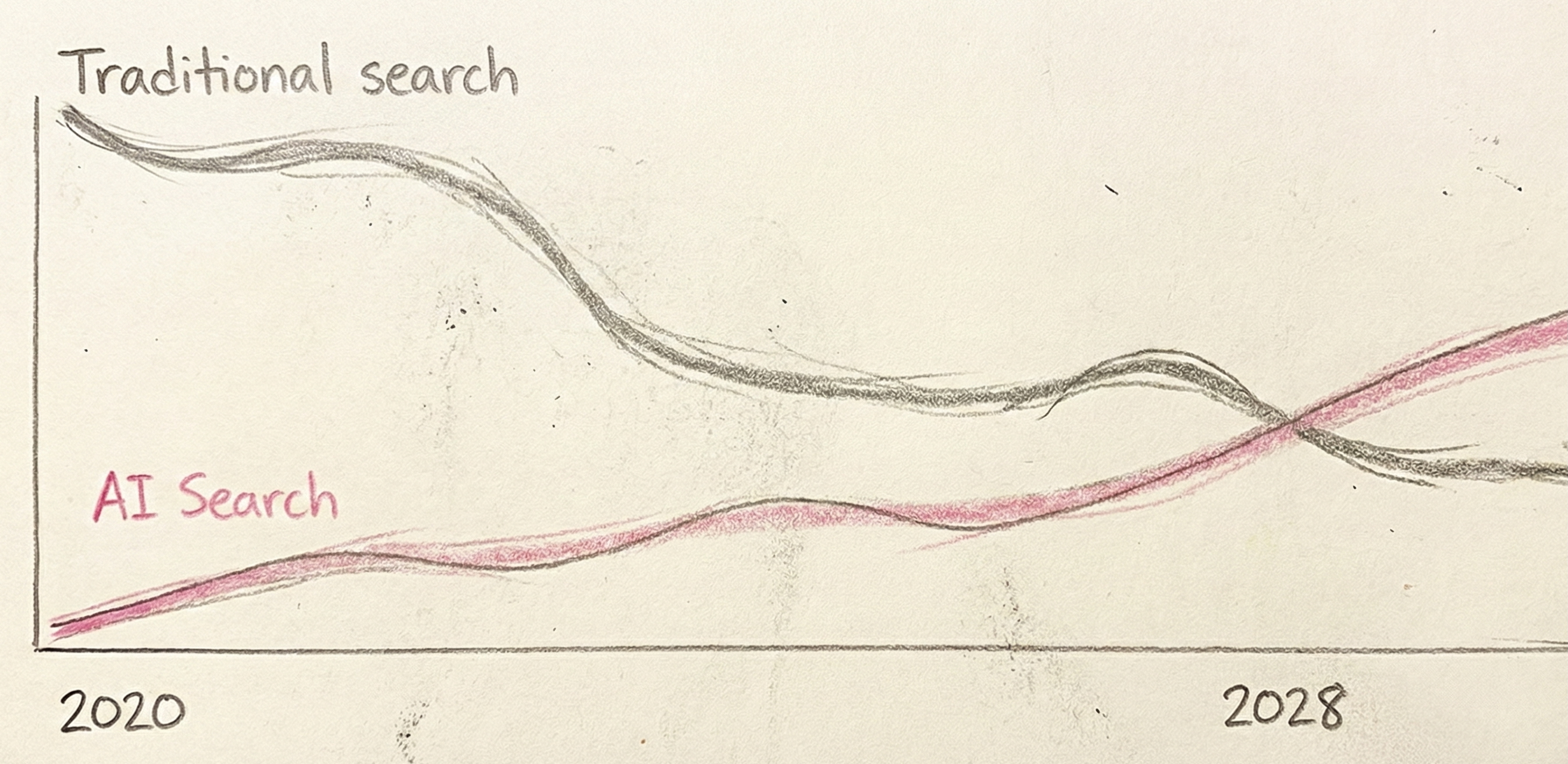
The best AI search analytics tools for GEO and AEO in 2026. Compare HeyAmos, Semrush, Ahrefs Brand Radar, Profound and more on tracking, action and price.
Quick answer: For most marketing teams, the best AI search analytics tool is HeyAmos. It measures where you show up across all major LLMs like ChatGPT, AI Overview, AI Mode, Gemini, Claude and more, then surfaces the top actions to take each week and drafts the content to close the gaps. If your team lives in an SEO suite, Semrush and Ahrefs add AI visibility to tools you already use. For enterprise analytics with strict security needs, look at Profound or Evertune. But if you are a CMO or marketing leader who wants a report your board will actually read and a plan your team can act on, start with HeyAmos.
Disclosure: HeyAmos is our own platform, so we’re naturally closest to it. We include it because it competes directly in this category, and we’ve assessed every tool here on the same criteria: AI platform coverage, pricing, workflow depth, reporting, and how easily insights turn into action.
Proof: how this plays out
Fielddrive, an onsite event-technology platform, showed up in AI answers within 21 days of working with HeyAmos, versus the six-plus months they expected from SEO. Every lead AI sent matched their ideal customer profile, and prospects now tell the sales team they found Fielddrive through ChatGPT, Gemini, Perplexity, and AI Overviews.
"For SEO it takes at least six months. With AEO, we saw results in the first two or three weeks," says Vignesh Ramalingam, Director of Marketing & Digital Initiatives at Fielddrive.
Read the full Fielddrive case study.
AI search analytics tools at a glance
Pricing note: Pricing changes fast in this space. The prices here were checked in August 2026 and should be treated as directional. Always verify current pricing on each tool’s own website before you buy.
| Tool | Best for | Key strength |
|---|---|---|
| HeyAmos | Marketing teams that want to improve AI visibility, not just track it | Measures where you show up across all major LLMs like ChatGPT, AI Overview, AI Mode, Gemini, Claude and more, surfaces the top actions each week, and drafts the content to close the gaps |
| Semrush | Teams that want SEO + AI search visibility in one platform | Adds AI visibility to an existing SEO workflow |
| Ahrefs | SEO teams that want AI signals next to search and links | AI visibility layered onto strong backlink and content research |
| Profound | Enterprises with security, SSO, and compliance requirements | Enterprise-grade AI visibility analytics |
| Evertune | Larger brands and agencies needing broad model coverage | Cross-model benchmarking at scale |
| Otterly | Budget-conscious teams and agencies | Fast setup and daily prompt monitoring |
| Promptwatch | Teams that run GEO as a prompt portfolio | Prompt volumes and citation analysis |
For marketing teams
If you lead marketing, the job is not to collect dashboards. It is to show progress and drive it. A good AI visibility tool should make three things easy.
Report to your CMO. Lead with one number: your share of voice versus competitors across the AI engines your buyers use. Add the trend, the prompts you are winning and losing, and the next two or three actions. HeyAmos packages this into a single CMO report, so you are not stitching together a 47-tab spreadsheet the night before a board meeting.
Benchmark against competitors. Visibility only means something in context. You need to see where rivals are cited that you are not, and which sources are driving those answers, so you know exactly what to fix.
Turn data into action. The tools that move the needle connect each gap to a specific next step and then tie completed work back to measured visibility change. That is what Fielddrive found:
"HeyAmos gave us specific actions, AI-optimized drafts, and measurable citations. It was almost like having an extended team," says Vignesh Ramalingam, Director of Marketing & Digital Initiatives at Fielddrive.
Intro
Search changed faster between 2024 and 2026 than it did in the prior decade.
Google AI Overviews now reach more than 2 billion users per month across 200+ countries, according to a January 2026 Guardian investigation. ChatGPT search moved from beta to mainstream usage. OpenAI reported over 1 billion web searches in ChatGPT during a single week in April 2025. Perplexity, Gemini, Claude, and Microsoft Copilot have all become meaningful discovery channels in their own right.
The result is a structural shift in how people find brands.
Traditional search engine optimization (SEO) focused on rankings and clicks. But in AI-driven search experiences, users often get a complete answer without clicking anything. If your brand is not cited, mentioned, or recommended inside the AI-generated response, you may effectively be invisible, regardless of how well you rank in classic search.
Multiple studies now show significant downstream impact. One Authoritas analysis cited by The Guardian found click-through rates dropping by up to 80% for some queries when AI summaries appear. Google has disputed aspects of the methodology, but the directional change is clear: visibility is shifting from links to answers.
This shift has created two closely related disciplines that marketing teams now need to manage: Generative Engine Optimization (GEO) and Answer Engine Optimization (AEO).
This guide covers 11 tools built specifically for that job. Each section explains what a tool tracks, how reporting works, where it fits in your stack, and when it makes sense to use it, so you can match the right tool to your team’s maturity, use case, and budget.
What GEO and AEO Mean in Practice
How AI Answers Get Built: Citations, Mentions, and "No Link" Mentions
AI answers pull from indexed content, but not all appearances are equal.
A citation means the AI engine links to your source. Users can click through. This is the closest analog to a traditional search result.
A mention means your brand or content is referenced in the answer text without a link. You get visibility, but no direct path back to your site.
A "no link" mention is the same as a mention: your brand appears, but users have no obvious way to reach you. In some interfaces, this is the default.
What drives inclusion varies by engine. A Yext analysis published in October 2025 examined 6.8 million citations across 1.6 million responses. The finding: 86% of AI citations came from sources brands "own or manage" (first-party sites and listings). Gemini citations skewed even more heavily toward brand-owned domains, with 52.15% coming from brand websites.
This means GEO isn't just about earning links from third parties. It's also about ensuring your own properties are structured and authoritative enough to be pulled into answers.
Why "Being Cited" and "Being Recommended" Are Different Outcomes
A citation is factual. The AI is saying "here's where I found this."
A recommendation is behavioral. The AI is saying "consider this option."
Both matter, but they require different measurement. A brand can be cited frequently for definitions or statistics but never recommended when users ask "what should I use?" Tracking both tells you whether you're seen as an authority, a solution, or neither.
What Teams Should Measure Weekly (Minimum Set)
At minimum, track:
- Visibility by engine: Are you appearing in AI Overviews, ChatGPT search, Perplexity, Gemini, Claude, and Copilot? How often?
- Citation vs. mention ratio: When you appear, do users have a path back to you?
- Share of voice by prompt category: For the prompts that matter most to your business, how do you compare to competitors?
- Source gaps: Which competitors are being cited from sources you don't appear on?
- Prompt coverage: Are you tracking the prompts your buyers actually use, or just the keywords you already rank for?
Why AI Search Visibility Is Now a Board-Level Metric
Google AI Overviews Scale and Why It Changes Click Behavior
Google AI Overviews aren't an experiment. They're a default.
With 2 billion monthly users across 200+ countries, AI Overviews are now a primary interface for search. Semrush data showed AI Overview presence in their dataset rising from 6.49% in January 2025 to nearly 25% in July 2025, before settling at 15.69% in November 2025. The mix of query types shifted too. Informational share declined while commercial and transactional queries increasingly triggered AI Overviews.
When an AI summary answers the question, users often don't scroll. The clickthrough drop, even if debated in magnitude, is real enough that brands are losing traffic without losing rankings.
ChatGPT Search and Perplexity as Discovery Channels
ChatGPT search launched on October 31, 2024. By December 16, 2024, it expanded to logged-in users. By February 5, 2025, it was available to everyone where ChatGPT operates.
The pace accelerated. By April 2025, OpenAI had added shopping-oriented improvements and reported that users made "more than a billion web searches in ChatGPT" in a single week.
Perplexity, Gemini, and Claude have smaller user bases but growing influence, especially among researchers, analysts, and early adopters who shape purchase decisions.
These aren't replacements for Google. They're parallel discovery paths. If your brand doesn't exist in these answers, you're invisible to a growing segment.
The New Risk: Competitors Become the Default Recommendation
Here's the scenario that keeps marketing leaders awake:
A potential customer asks ChatGPT, "What's the best CRM for mid-market SaaS?" Your competitor appears in the answer. You don't. The user never searches for you because they already have a recommendation.
This isn't hypothetical. It's happening. And unlike SEO, where you could at least see you weren't ranking, many teams don't know they're missing from AI answers until they deliberately check.
The boards that pay attention to market share and brand awareness are starting to ask: "Where do we stand in AI search?"
What to Look for in an AI Search Analytics Platform
Coverage: Which Engines and Experiences Matter
A complete platform should track:
- Google AI Overviews (the largest by reach)
- Google AI Mode (the conversational search experience)
- ChatGPT search (fastest-growing)
- Perplexity (influential among researchers)
- Gemini (Google's conversational AI)
- Claude (Anthropic's model, increasingly used in enterprise)
- Copilot (Microsoft's AI assistant)
A tool that covers AI Overviews alone will give you a partial view of the landscape.
Competitive Benchmarking: Share of Voice, Top Prompts, Citation Sources
You need to see:
- Share of voice: How often you appear vs. competitors for your target prompts
- Top prompts: Which queries drive the most visibility in your category
- Citation sources: Where competitors are being cited that you aren't
Without competitive context, you're optimizing in the dark.
Explainability: "Why We're Not Showing Up" vs. Just Reporting That You're Not
The difference between useful and less useful analytics is explainability.
A reporting-focused tool tells you: "You appeared in 12% of tracked prompts."
A more diagnostic tool tells you: "You're not appearing for [prompt X] because [competitor Y] is being cited from [source Z] that covers [topic] you don't address."
Explainability turns data into action.
Action Layer: Playbooks, Tasks, and Impact Tracking
Data without action is a dashboard no one checks after the first week.
Look for:
- Playbooks: Prioritized recommendations based on your gaps
- Task tracking: A way to assign and monitor actions
- Impact measurement: Visibility change tied to completed actions
Team Readiness: Reporting for CMOs, Exports, Integrations, Multi-Brand Workspaces, Agency Workflows
Enterprise features matter:
- Executive reporting: Summaries a CMO will actually read
- Exports and API access: For custom dashboards and integrations
- Multi-brand workspaces: For portfolio companies or agencies
- Agency workflows: White-label options, client management, permissions
Data Quality: Frequency, Geo/Language Support, De-Personalized Baselines
AI answers vary by geography, language, and user history. Quality platforms:
- Run queries from neutral, de-personalized baselines
- Support multiple geographies and languages
- Update data frequently enough to catch changes
1. HeyAmos
Best for: Marketing teams that want to improve AI visibility, not just track it. It measures where you show up, surfaces the top actions each week, and drafts the content to close the gaps
Pricing: Plans start at $99/month (Starter), with Growth at $249/month and Pro at $399/month, plus a custom Enterprise retainer.
What It Tracks
HeyAmos monitors AI Search visibility across all major LLMs like ChatGPT, AI Overview, AI Mode, Gemini, Claude and more. Tracking includes your brand and competitors, with visibility measured at the prompt level.
What You Get in Reporting
CMO Report: A summary designed for executive consumption. It includes your rank vs. competitors, the sources driving answers in your category, and prompts to watch. The goal is a report your leadership team will actually read, not a 47-tab spreadsheet.
"Why you're not showing up" diagnostics: HeyAmos doesn't just tell you that you're missing from answers. It explains the gaps: which competitor sources are being cited, what topics you're not covering, where your content falls short.
Data-driven GEO playbook: Prioritized actions based on your specific gaps. The playbook updates as results change, so recommendations stay current.
Performance dashboard: Tracks actions completed vs. visibility impact. This closes the loop between "we did the work" and "it moved the needle."
Where It Fits in a Stack
HeyAmos serves as a primary GEO platform. It's not an add-on to existing SEO tools. It's purpose-built for AI Search visibility with an emphasis on turning findings into action.
Human Support Model
Teams use HeyAmos both in-house and with agency support. The platform includes human guidance for teams that want help interpreting findings and prioritizing execution.
Use When
- You need reporting that an exec team will actually read
- You want a system that turns findings into prioritized actions
- You need explainability, not just visibility metrics
- You want completed actions tied to measured outcomes
Watch-Outs / Evaluation Questions
- Ask how the playbook prioritizes actions and how often recommendations update
- Clarify what human support includes and whether it's standard or add-on pricing
2. Semrush
Best for: Teams that want SEO + AI Search visibility inside one platform
Pricing: the AI Visibility Toolkit starts at around $99/month per domain, billed annually, for 25 prompts (verify current pricing on their site). It is available standalone or as part of Semrush One.
What It Tracks
Semrush One, launched October 29, 2025, unifies traditional SEO and AI Search visibility across Google Search, AI Overviews, ChatGPT, Gemini, and Perplexity. Semrush cites an AI visibility dataset of 90 million prompts alongside its established keyword and backlink databases.
Semrush added AI Mode as a search engine option in Position Tracking on July 22, 2025. AI Overviews data appears across multiple tools: Position Tracking, Organic Research, Domain Overview, Keyword tools, and Sensor.
What You Get in Reporting
Position tracking with AI visibility overlay. Keyword and backlink intelligence. Competitor analysis across both traditional search and AI experiences.
Where It Fits in a Stack
Semrush expands an existing SEO workflow rather than replacing it. If your team already runs Semrush for SEO, adding AI visibility keeps everything in one place.
Use When
- Your org already runs Semrush and wants AI visibility added without switching stacks
- You need large keyword and backlink datasets alongside AI tracking
- You want one vendor for SEO + AI visibility
Watch-Outs / Evaluation Questions
- Based on public positioning, the action layer is SEO-centered; evaluate whether playbook outputs fit how your team plans to work on GEO
- Clarify which AI engines are fully supported vs. in development
3. Ahrefs
Best for: SEO teams that want AI-related visibility signals next to search and links
Pricing: Brand Radar is an add-on, starting at around $398/month (Select) or $699/month (All Platforms) (verify current pricing on their site).
What It Tracks
Ahrefs added AI-related features including AI Suggestions, AI Search Intent, AI Translations, and AI Content Helper. For AI Search visibility specifically, Ahrefs "Brand Radar" includes indexes for AI Overviews, ChatGPT, and Perplexity.
What You Get in Reporting
Brand and competitor monitoring with AI visibility signals. Search demand context. Link intelligence. The core Ahrefs experience (backlinks, content explorer, keyword research) with AI layers added.
Where It Fits in a Stack
Ahrefs is an SEO-first platform, with AI visibility layered onto it. It's useful for teams whose operating system is still SEO + content + links but who want AI signals available.
Use When
- You want AI visibility signals but your operating system is still SEO + content + links
- You already use Ahrefs and want to add AI monitoring without a second tool
- You need strong backlink and content research alongside AI tracking
Watch-Outs / Evaluation Questions
- Brand Radar is positioned as a paid add-on. Verify current pricing and total cost for your coverage needs on their site
- Ahrefs is centered on SEO, with AI visibility layered on top; based on public positioning, evaluate how much you need prompt-level workflows and AI-answer-native reporting
4. Peec
Best for: Lightweight AI visibility dashboards and reporting
Pricing: starts at around €89 (about $95)/month for 50 prompts (verify current pricing on their site).
What It Tracks
Peec provides AI search analytics with visibility, position, and sentiment tracking across AI engines. The Berlin-based startup raised a roughly $21M Series A in 2025.
What You Get in Reporting
Exports, Looker Studio connector, and API options are core workflow elements. Peec is analytics-centered and designed to feed into internal dashboards or client reporting systems.
Where It Fits in a Stack
Analytics and reporting layer. Peec works well for teams that already have their own action systems and need clean data inputs.
Use When
- You need straightforward reporting and exports for internal dashboards or client reporting
- You have an existing action workflow and just need the data layer
- You want API access for custom integrations
Watch-Outs / Evaluation Questions
- Evaluate the action layer: Peec is analytics-centered, so many teams pair it with their own execution workflow
- Confirm refresh frequency and coverage for your priority engines
5. Profound
Best for: Organizations prioritizing enterprise-grade AI visibility analytics
Pricing: the Starter plan starts at around $99/month, billed yearly (verify current pricing on their site).
What It Tracks
Profound monitors visibility across AI answer experiences with an enterprise focus. The entry tier centers on ChatGPT, with broader engine coverage on higher tiers. A December 2024 product announcement added "Prompt Volumes" as a feature. Profound has raised $96M at around a $1 billion valuation.
What You Get in Reporting
Analytics-first reporting with enterprise controls. Profound offers SOC 2 compliance and SSO at the enterprise tier, along with premium support. This is a platform built for organizations with security requirements and structured procurement processes.
Where It Fits in a Stack
Analytics-first for enterprise programs. Teams typically use Profound to generate insights that inform execution across content, PR, and web, with execution running in their own workflows.
Use When
- You have a team that can turn analytics into execution across content, PR, and web
- Security, SSO, and compliance are requirements
- You need enterprise-grade support and SLAs
Watch-Outs / Evaluation Questions
- Pricing and plan details vary across third-party reviews; confirm directly during evaluation
- Clarify what execution support is included and what typically sits with internal or agency resources
6. Evertune
Best for: Larger brands and agencies that want broad AI model coverage and methodology depth
Pricing: the Pro plan starts at around $800/month for 100,000 prompts across 11 models, with custom Enterprise pricing (verify current pricing on their site).
What It Tracks
Evertune tracks across ChatGPT, AI Overviews, Gemini, Claude, and additional models. The platform distinguishes between base model responses and consumer app experiences, which is useful for understanding how raw model behavior differs from what users actually see.
What You Get in Reporting
Competitive benchmarking across AI models. "Prompt at scale" methodology. Coverage depth that supports enterprise measurement programs.
Where It Fits in a Stack
Enterprise programs with structured workflows. Evertune works for teams that need scale, repeatable measurement, and cross-model comparisons.
Use When
- You need scale, repeatable measurement, and cross-model comparisons
- You want to understand base model vs. consumer app differences
- You're running an enterprise program with structured reporting cadences
Watch-Outs / Evaluation Questions
- Validate the methodology during evaluation; test the "prompt at scale" approach against your own use cases
- Clarify pricing model for enterprise coverage
7. Otterly
Best for: Prompt monitoring and AI answer tracking on a smaller budget
Pricing: starts at around $29/month for 15 prompts (verify current pricing on their site).
What It Tracks
Otterly covers major AI search engines including Google AI Overviews, ChatGPT, and Perplexity. Daily automated prompt monitoring is standard. The platform attempts to simulate neutral outputs by avoiding personalization factors. The Vienna-based tool won a European Search Award in 2026.
What You Get in Reporting
Prompt monitoring, brand reports, and agency-friendly features including workspaces and exports.
Where It Fits in a Stack
Fast setup, ongoing monitoring. Otterly works for teams that want visibility tracking without enterprise complexity or enterprise pricing.
Use When
- You want fast setup and ongoing monitoring without enterprise complexity
- You're an agency that needs workspaces for multiple clients
- You're budget-conscious but need credible coverage
Watch-Outs / Evaluation Questions
- Evaluate depth of competitive benchmarking and explainability features
- Confirm how "neutral" baselines are achieved and whether methodology is documented
8. Promptwatch
Best for: Prompt-led tracking with volumes, competition, and citation analysis
Pricing: check their site for current pricing.
What It Tracks
Promptwatch tracks across ChatGPT, Claude, Gemini, and Perplexity. Features include prompt volume tracking (not just visibility but how often prompts are used), competitor comparison, and citation analysis.
Multi-language and geo support is available. Promptwatch's December 2025 changelog shows active development on exports, new languages, and dashboards.
What You Get in Reporting
Prompt tracking, prompt volumes, competitor comparison, citation analysis. The platform positions GEO as a prompt portfolio, similar to how teams manage paid search query sets.
Promptwatch has publicly noted early-stage venture backing, per their agency page.
Where It Fits in a Stack
Prompt portfolio management. Promptwatch fits teams that think about GEO in terms of prompt sets rather than just keyword lists.
Use When
- You run GEO as a prompt portfolio, similar to how teams manage paid search query sets
- You need multi-language and geo support
- You're an agency selling AI visibility reporting and need client-ready outputs
Watch-Outs / Evaluation Questions
- Clarify how prompt volumes are calculated and sourced
- Evaluate agency workflows and white-label options if relevant
9. AthenaHQ
Best for: Teams that want AI Search tracking plus guided actions and workflows
Pricing: free tier available; the paid Starter plan starts at around $295/month on a credit-based model (verify current pricing on their site).
What It Tracks
AthenaHQ focuses on tracking, content gaps, citations, and actions across nine models. The platform connects visibility data to suggested next steps and is YC-backed.
What You Get in Reporting
Citation tracking, content gap identification, and action workflows. Self-serve pricing is visible on the site. Validate current pricing during evaluation.
Where It Fits in a Stack
A "command center" approach. AthenaHQ ties tracking to action for mid-market to enterprise teams.
Use When
- You want a more "command center" approach tied to action
- You need content gap analysis alongside visibility tracking
- You're mid-market to enterprise and want guided workflows
Watch-Outs / Evaluation Questions
- Evaluate how actions are generated and whether they're specific to your gaps
- Confirm coverage across your priority AI engines
10. Relixir
Best for: Teams looking for a packaged GEO program with analytics plus execution support
Pricing: check their site for current pricing.
What It Tracks
Relixir positions as end-to-end GEO: analytics plus execution support rather than pure SaaS.
What You Get in Reporting
GEO reporting integrated with program delivery. The positioning is structured program, not just tool.
Where It Fits in a Stack
Teams aligning marketing and content production around GEO as a discipline. Relixir works when you want a structured program, not just a dashboard.
Use When
- You want a structured program and are aligning marketing + content production around it
- You prefer a managed approach over pure self-serve
- You need execution support, not just analytics
Watch-Outs / Evaluation Questions
- Validate what is automated and what is delivered as a service during evaluation
- Clarify pricing model: is it subscription, retainer, or hybrid?
- Confirm how reporting integrates with any execution services
11. Anvil
Best for: Teams that want LLM-specific tracking and content guidance
Pricing: check their site for current pricing.
What It Tracks
Anvil covers major LLMs with a focus on competitive comparisons and content underperformance guidance. The platform positions as "the SEO platform for the AI era."
What You Get in Reporting
Competitor comparisons, content optimization guidance, LLM-native insights.
Where It Fits in a Stack
Anvil sits alongside existing SEO tooling. It's built for teams that want an LLM-native perspective without abandoning their current SEO stack.
Use When
- You want an LLM-native tool that sits alongside existing SEO tooling
- You need content guidance specific to LLM performance
- You want an LLM-first perspective and are open to a newer entrant
Watch-Outs / Evaluation Questions
- Evaluate integration depth with your existing tools
- Clarify coverage across consumer AI apps (not just base models)
A Practical Rollout Plan for the First 30 Days
Week 1: Prompt Universe + Competitor Set + Baseline Report
- Define the prompts that matter to your business (not just keywords, but the actual questions buyers ask)
- Identify your top 3-5 competitors for AI visibility
- Run baseline tracking across priority engines
- Generate your first visibility report
Week 2: Source Gap Analysis + Quick Wins
- Identify which sources competitors are being cited from
- Map gaps: where do they appear that you don't?
- Identify quick wins: existing content that could be optimized, missing topics you can address fast
- Prioritize 5-10 actions
Week 3: Execute 5-10 Actions (Content, Technical, PR/Distribution)
- Create or optimize content to close source gaps
- Address technical issues (indexing, schema, site structure)
- Consider PR or distribution plays if third-party citations matter
- Document what you did and when
Week 4: Measure Change and Lock the Operating Cadence
- Re-run visibility tracking
- Compare to baseline
- Attribute changes to actions where possible
- Set your ongoing cadence (weekly tracking, monthly action sprints, quarterly executive reviews)
Conclusion
The market for AI Search analytics tools is maturing fast. In 2024, most teams were still debating whether GEO mattered. In 2026, it's a board-level conversation.
Decision Criteria Summary
Choose based on:
- Coverage: Does it track the engines your buyers use?
- Competitive benchmarking: Can you see share of voice and competitor sources?
- Explainability: Does it tell you why you're not appearing, not just that you're not?
- Action layer: Can you go from insight to prioritized action?
- Team fit: Does it match your reporting needs, security requirements, and workflow?
Evaluate HeyAmos
If you need a platform that reduces metric overload, explains why competitors show up, ships a data-driven GEO playbook that updates, and ties completed actions to outcomes, with human guidance available, HeyAmos is worth evaluating.
Start with a baseline report. See where you stand. Then decide how to act.
Frequently asked questions
What is the best AI search analytics tool?
For most teams, HeyAmos. It tracks your visibility across all major LLMs like ChatGPT, AI Overview, AI Mode, Gemini, Claude and more, explains why you are or aren't showing up, and turns that into a weekly action plan. SEO-first teams may prefer Semrush or Ahrefs; enterprises with heavy security needs often shortlist Profound or Evertune.
What is the best LLM visibility tool for marketing teams?
HeyAmos is built for marketing teams. It gives you a CMO-ready report, competitor benchmarks, and prioritized actions, plus AI-optimized content drafts, so you can improve visibility, not just watch it. Fielddrive used it to show up in AI answers within 21 days, with every AI-sourced lead matching their ideal customer profile.
How do I report AI visibility to my CMO?
Lead with one number: your share of voice versus competitors across the AI engines your buyers use. Then show the trend, the top prompts you're winning and losing, and the two or three actions you're taking next. HeyAmos packages this into a single CMO report, so you don't have to build it by hand.
What's the difference between GEO and AEO?
GEO (Generative Engine Optimization) is about getting your brand cited and recommended inside AI-generated answers. AEO (Answer Engine Optimization) is about being the direct answer to a buyer's question. They overlap heavily, and most teams manage them together.
Can GEO replace SEO?
No. GEO is additive to SEO, not a replacement.
AI engines pull from indexed content. If your content isn't findable, authoritative, and relevant in traditional search, it's unlikely to be cited in AI answers either.
The Yext research finding, that 86% of AI citations come from brand-owned or managed sources, reinforces this. Your own properties still matter. GEO is about ensuring you appear in the AI layer on top of search, not instead of search.
What's the minimum you need to track to know if you're improving?
At minimum:
- Visibility percentage: How often do you appear in tracked prompts?
- Share of voice vs. top competitor: Are you gaining or losing ground?
- Citation vs. mention ratio: When you appear, do users have a path back?
Track these weekly. Everything else is useful context but not essential.
How do you avoid noisy data from personalization?
AI answers vary based on user history, location, and other personalization factors.
Quality tools address this by:
- Running queries from de-personalized baselines
- Using neutral user profiles
- Aggregating across multiple queries to smooth out variance
Ask vendors how they handle this. If they can't explain their methodology, the data may be unreliable.
Do citations matter more than mentions?
It depends on your goal.
Citations drive traffic. The user can click through to your site. This is measurable and valuable.
Mentions drive awareness. The user sees your brand but may not visit. This still matters for top-of-funnel brand building.
For most marketing teams, citations are the primary metric. But if you're in a category where brand awareness is the bottleneck, mentions matter too.
About the author
Oliver Pechter, Co-Founder & CMO, HeyAmos. Oliver is a marketing leader who has scaled multiple startups across fintech and AI, after earlier years in media including Business Insider. He now builds HeyAmos to help brands win new customers from AI Search.