How to Take Control of Your Brand's Wikipedia Page (and Why It Shapes AI Search)
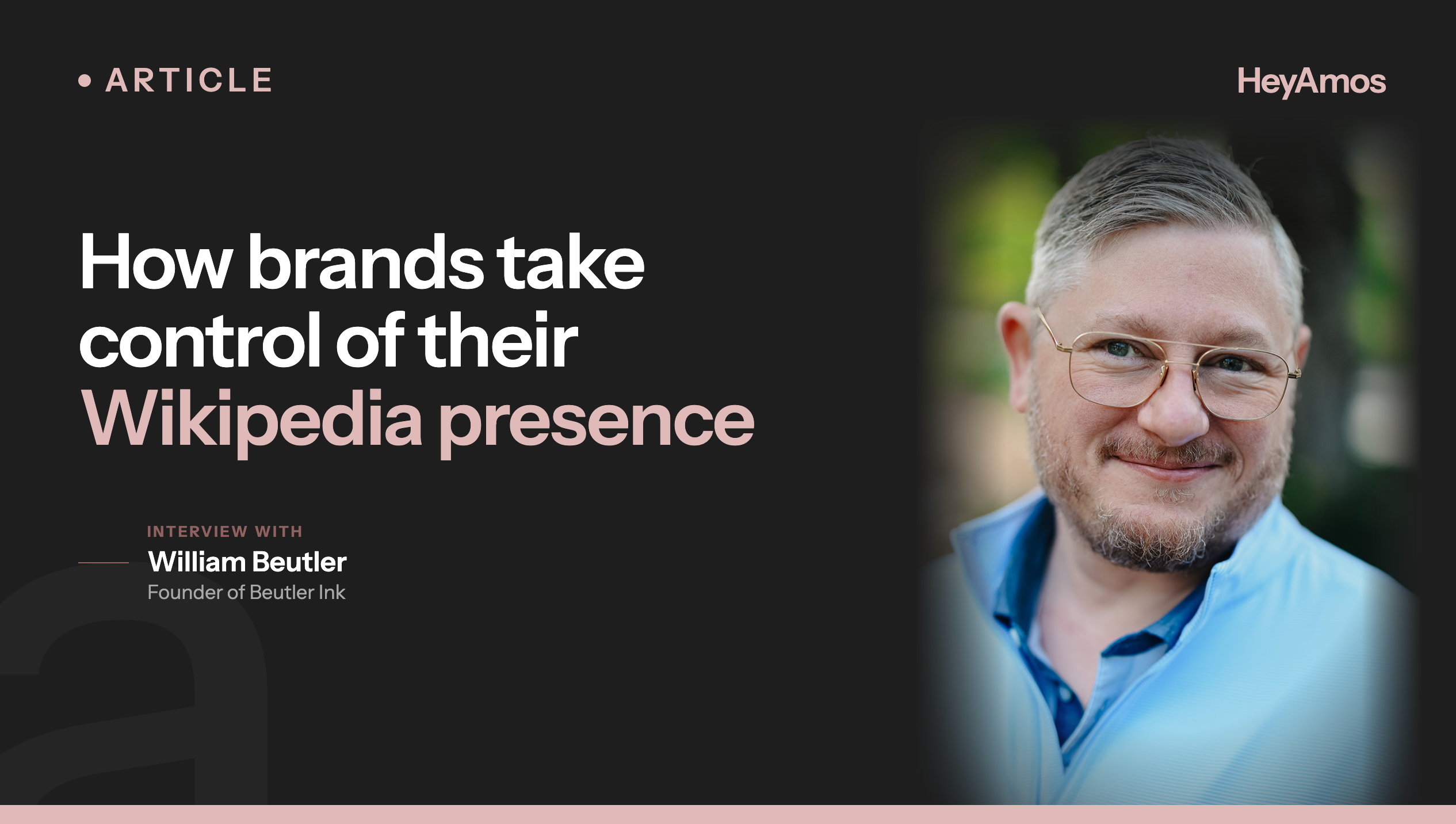
Wikipedia is a top-10 source for AI answers. Wikipedia expert Bill Beutler explains how brands can edit their page so changes actually stick, what it takes to get a new page approved, and why PR teams should care.
Quick answer: Yes - a Wikipedia page helps your brand show up in AI search. Wikipedia is one of the top sources ChatGPT, Perplexity, Gemini and Google AI Overviews pull from when they answer questions about brands, so an accurate page shapes how AI describes you. To fix an existing page, never edit it yourself: create an account, disclose your connection, and post a cited request on the article's talk page using the Edit COI template. If you don't have a page yet, you'll need roughly four in-depth feature articles in major publications first.
Wikipedia is one of the top 10 sources AI models draw on when they answer questions about brands - across customers, industries and geographies. For ChatGPT it is often the single biggest citation source after Reddit, showing up in roughly 15% of all citations. If you want LLMs to describe your brand accurately (or at all), Wikipedia is not optional.
But Wikipedia is not pay-to-play, and most brands who try to edit their own page get reverted within days.
We sat down with Bill Beutler, founder of Beutler Ink and a Wikipedia editor of 20 years who now manages Wikipedia presence for brands full-time, to unpack how the platform actually works - and how to make changes that stick.
Prefer to watch instead? The full session is on our webinars page.
TL;DR
- AI assistants run fan-out queries before answering, and they consistently pull from Wikipedia because it is structured, neutral and open - no paywall, no login wall.
- Never edit your own brand page directly. Disclose your connection, post your request on the article's talk page with the Edit COI template, and let a volunteer editor make the change.
- Every fact needs a citation from independent, professional journalism. Press releases, Forbes contributor pieces and CEO interviews don't count.
- To get a new page created, you need roughly four "anchor" articles in tier 1 or tier 2 publications (think Bloomberg, Wall Street Journal, TechCrunch) where your brand is the main focus - features of 1,500+ words, written in the journalist's voice.
- Expect to wait weeks to months. The conflict-of-interest request queue recently passed 500 open requests, driven largely by brands waking up to AI search.
- Do not use LLMs to write Wikipedia content. It is against policy and editors can tell.
Why AI keeps citing Wikipedia
Every time you type a prompt into ChatGPT, Claude or Gemini, the model runs a series of information searches - fan-out queries - to gather sources before it answers. LLMs prefer structured, objective information, and that preference leads them to Wikipedia again and again.
There is a second, less visible reason: every major LLM was trained on Wikipedia. The models don't just cite the articles - they absorbed them, including all the behind-the-scenes policy pages.
And while much of the top-tier press is now paywalled or actively blocking AI crawlers, Wikipedia was built to be open. Its Creative Commons licence explicitly allows commercial reuse. As readers shift from search results to AI answers, Wikipedia is becoming less of a destination and more of an input.
"Wikipedia may be moving from one of the first pages you see on search results to background infrastructure - no less important, but less read than repeated." - Bill Beutler
Change what Wikipedia says about your brand, and you shift a whole layer of AI answers in one move.
How Wikipedia actually works
There is no editor-in-chief. Everything you read was written and maintained by volunteers - largely academics, developers and freelancers, skewing both younger and older than the general population. Most longtime editors aren't even writing content; they do maintenance, sorting and recategorising.
The closest thing to a review process is what editors call the BRD cycle: bold, revert, discuss.
"You boldly make a change. Someone may revert that change, and then you're supposed to discuss it rather than changing it back." - Bill Beutler
Wikipedia made a radical decision early on: it decentralised expertise. Individual editors claiming to be experts carry no weight. What matters is process and sources.
"Wikipedia is not trying to declare the truth of anything. It is reporting on what well-known mainstream sources have said, and trying to represent topics proportionally to how important something is." - Bill Beutler
If that sounds familiar, it should - it is essentially what AI search does, with a neural network in place of the volunteers. Both look for reputable sources, both aim for objectivity, and neither gets it right every time.
You have a page but it's wrong or outdated: how to change it so it sticks
The most common failure mode: someone from the brand logs in, edits the page directly, and watches the edit get reverted. Here is the process that works instead.
1. Create a personal user account
One person, one account. Shared agency accounts get blocked. Your first name plus your company name works well and signals professionalism.
2. Disclose your conflict of interest
Wikipedia's conflict of interest guideline asks paid representatives not to edit the article about who is paying them. Follow it. Editors tolerate brand representatives who play by the rules - and scrutinise everyone else.
3. Use the talk page, not the article
Every Wikipedia article has a talk page sitting behind it - a page very few readers ever visit. That is where brand representatives are invited to work. Post a message that says who you are, who you work for, what is wrong or missing, and offer a ready-made fix: a short paragraph, carefully cited to independent journalism, with a citation for every fact.
4. Add the Edit COI template
Tag your request with the Edit COI template. That puts it in a queue for volunteer editors to review. If they agree your change improves the article, they make it themselves.
5. Expect to wait
That queue recently hit almost 500 open requests - record territory. AI search has made brands realise Wikipedia matters, and the volume of requests has grown faster than the volunteer capacity to review them. Changes take weeks on the short end, sometimes months.
Getting it right the first time is the single biggest thing you can do to speed this up. A clean, well-cited, neutral request gets actioned; a promotional one gets ignored or picked apart.
"Don't try to sneak one through, and don't expect to negotiate. They don't want to negotiate with you. Just tell them how to make the project better for their readers." - Bill Beutler
One more rule: do not use LLMs to generate the content. Wikipedia recently passed a policy against AI-written contributions. Ironically, ChatGPT and Claude are excellent coaches on Wikipedia's rules - they were trained on all of them - so use AI to understand the process, not to write the text.
You don't have a page: notability comes first
Creating a new page is much harder than changing an existing one. Editors are on guard against topics that lack public interest, and the controlling standard is the notability guideline: a critical mass of independent coverage proving that someone other than you - almost always a working journalist - thinks you are important.
How much coverage? Based on Bill's research into which sources actually appear in approved company articles, the benchmark looks like this:
- Four anchor articles in tier 1 or tier 2 publications. Tier 1 is the likes of Bloomberg and the Wall Street Journal; tier 2 is widely recognised trade press like TechCrunch. (Forbes and TechCrunch are the two most common sources on company pages.)
- You are the primary focus - or at most one of two or three companies discussed in depth.
- Substantial pieces - roughly 1,500 words minimum. Features and profiles, not news briefs.
- Written in the publication's voice. A Q&A with your CEO doesn't count - editors treat interviews as a spoken press release, unchecked and unedited.
- Plus supporting coverage - another eight to ten sources where you are mentioned in passing, to flesh out details. Focus on the four anchors and the rest tends to come along with them.
"Not a long list, not a passing mention, not a review, not a bullet point. We're looking for features, we're looking for profiles." - Bill Beutler
Watch out for coverage that looks like journalism but doesn't count: Forbes contributor and Forbes Council pieces (unedited or pay-to-play), and TechCrunch write-ups that are rewritten press releases. Editors can tell when no actual reporting happened.
Once you clear the bar, the route in is WikiProject Articles for Creation: write a draft, disclose your connection, submit it to the queue, and wait - often months. It is not first-in-first-out; reviewers pick whichever submissions they want. If anything is off, the draft gets thrown back, usually without personalised feedback.
A useful first step before any of this: sweep your own news coverage. Use Google News, a media database, and the LLMs themselves - ask them to surface stories you missed, including controversies. Wikipedia articles are not whitewashed, and if there is a real controversy in your past, putting it in your own draft (in neutral language) beats having an editor add it later.
What Wikipedia wants from your text
Editors are professionally allergic to corporate speak, spin, fluff and puffery. Of journalism's five Ws, Wikipedia really cares about three: who, what and when. Motivations and founding stories matter far less than actions and effects.
"Wikipedia specializes in hard facts, and it is cautious about soft facts." - Bill Beutler
Just the facts, every fact cited, written like an encyclopedia entry - because that is what it is.
What this means for PR and comms teams
There is a real opportunity here. Notability is built on earned media, which means PR agencies are the ones who can get a brand over the line - but most don't know what kind of sourcing Wikipedia needs.
"A lot of things that a client or a PR person would consider a good PR win may not do anything for Wikipedia." - Bill Beutler
Two references worth reading before your next pitch plan: the reliable sources guideline and the perennial sources list, where editors explain which outlets are allowed or disallowed and why.
The same logic increasingly applies to AI visibility. Much of the top-tier press is paywalled or blocks AI crawlers, so LLMs often lean on surprising, more niche outlets that remain open - and, for now, they still take subtly sponsored pieces at face value. Wikipedia is stricter than AI on sourcing. Aim for Wikipedia-grade coverage and you clear both bars at once.
Getting your brand facts straight and consistent across the web - Wikipedia included - is a big part of how brands start showing up in AI answers. Fielddrive, an onsite event-technology platform, did this work with HeyAmos and began appearing in AI answers within 21 days - versus the 6+ months they'd expect from SEO. Leads now tell their sales team they found Fielddrive through ChatGPT, Gemini, Perplexity and AI Overviews.
"For SEO it takes at least six months. With AEO, we saw results in the first two or three weeks." - Vignesh Ramalingam, Director of Marketing & Digital Initiatives, Fielddrive
Read the full Fielddrive case study.
Frequently asked questions
Does a Wikipedia page help my brand appear in AI search?
Yes. Wikipedia is one of the top sources AI tools cite when they answer questions about brands, and every major model was trained on it. An accurate, well-cited page makes it far more likely that ChatGPT, Perplexity, Gemini and Google AI Overviews describe your brand correctly - or mention you at all.
How do I get a Wikipedia page for my brand?
First you need notability: roughly four in-depth feature articles (1,500+ words) in major publications where your brand is the main subject, plus eight to ten supporting mentions. Then submit a draft through Articles for Creation, disclose your connection, and wait - approval often takes months.
Can I edit my own company's Wikipedia page?
You shouldn't edit it directly - it breaks the conflict of interest guideline and your changes usually get reverted. Instead, create an account, disclose who you work for, and post a cited request on the article's talk page using the Edit COI template so a volunteer editor can make the change.
Why does Wikipedia matter for ChatGPT and other AI tools?
Wikipedia is structured, neutral and open, with no paywall or login wall, so AI tools lean on it heavily when gathering sources. It's also part of the training data behind every major model. Change what Wikipedia says about your brand and you shift a whole layer of AI answers at once.
Can I just edit my brand's Wikipedia page myself?
You won't be ejected for one direct edit, but it is against the conflict of interest guideline and edits rarely stick. Use the talk page and the Edit COI template instead.
How many press articles do I need for a new Wikipedia page?
Roughly four substantial features (1,500+ words) in major publications where you are the main subject, plus eight to ten supporting mentions. Interviews, press releases and contributor posts don't count.
How long does it take to get a change or a new page approved?
Edit requests: weeks to months. New articles via Articles for Creation: often months. Backlogs are at record levels as more brands wake up to AI search.
Can I use ChatGPT to write my Wikipedia article?
No - Wikipedia policy now prohibits LLM-generated content. Use AI to understand the rules and research your coverage, then write the draft yourself (or work with a specialist).
Does being an active Wikipedia editor help my brand edits get accepted?
On the margins. Reputation earns you the benefit of the doubt, but the written policies still govern everything - don't count on special treatment.
What HeyAmos does
HeyAmos helps brands track and improve how they show up in AI search - from spotting where AI gets your brand wrong, to fixing the facts and coverage behind it, to measuring what actually moved the needle across ChatGPT, Gemini, Perplexity and Google AI Overviews.
This article is based on a HeyAmos webinar recorded in July 2026 — watch the full recording here.
About the author
Oliver Pechter — Co-Founder & CMO, HeyAmos. Oliver is a marketing leader who has scaled multiple startups across fintech and AI, after earlier years in media including Business Insider. He now builds HeyAmos to help brands win new customers from AI Search.